Why Your Ads Don’t Bring Customers (And What to Do Instead)
Games played with sticks and a ball have existed for thousands of years.
Ancient carvings in Egypt show early versions of team play, while in Ireland and Ancient Greece, similar games were already part of everyday life centuries before our era. Even today, in parts of Inner Mongolia, traditional variations are still played.
The idea is simple: tools and rules evolve, but the outcome depends on how the game is played.
Marketing works in a similar way.
Running ads should bring customers. That’s the expectation.
But for many businesses, it leads to something else entirely — wasted budget, confusion, and disappointing results.
If your ads aren’t working, the issue usually isn’t the platform.
More often, it’s what’s happening behind the scenes.
Let’s go through the most common reasons this happens — and how to approach them differently.
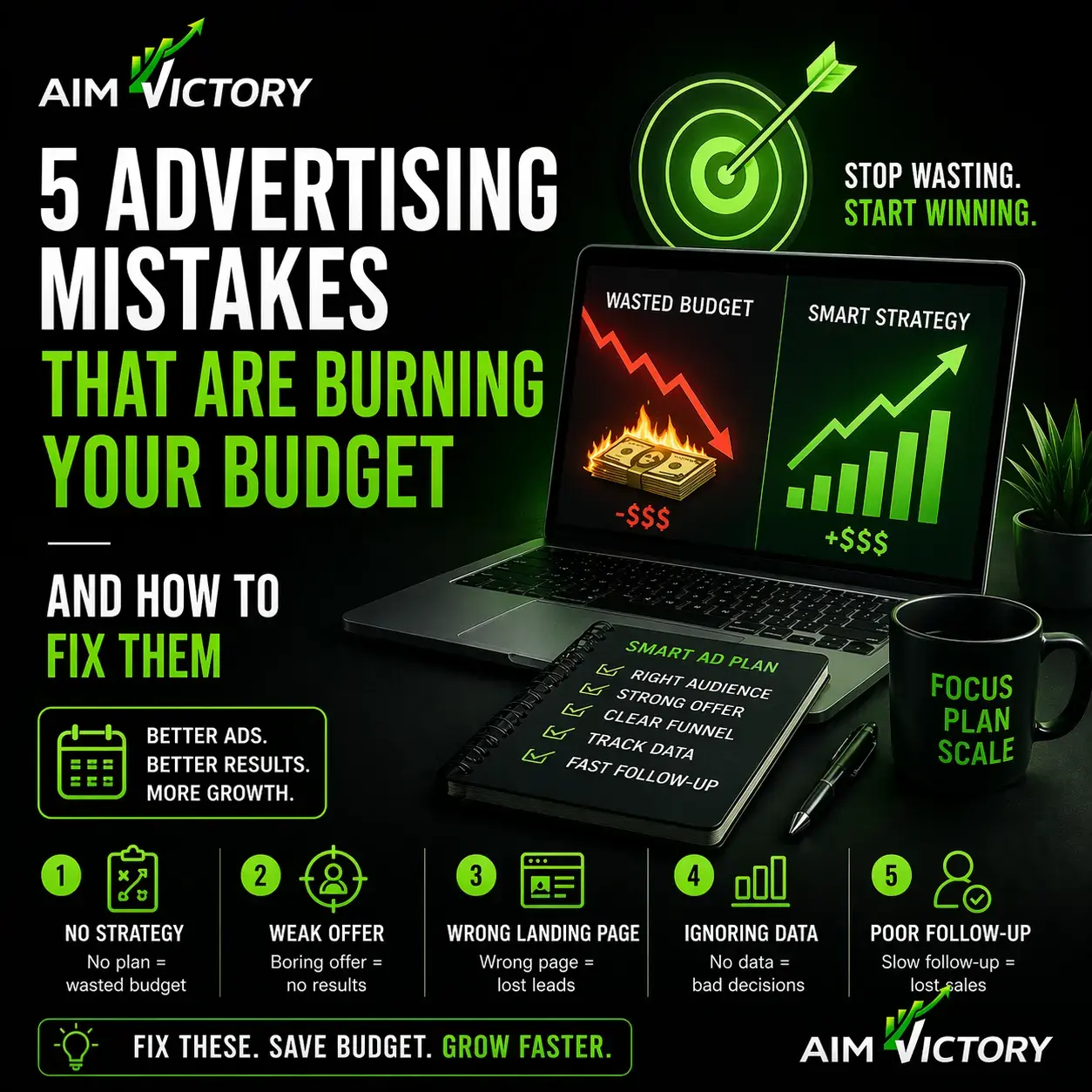
1. Running Ads Without a Clear Plan
A lot of businesses launch ads just to “see what happens.”
It feels like progress, but in reality, it’s unpredictable.
Without a basic structure, it’s hard to answer simple questions:
- who exactly you’re trying to reach
- what message they should respond to
- where they go after clicking
That’s where things start to fall apart.
What helps instead
Before spending money, take a step back and define:
- your target audience (not “everyone,” but a specific group)
- your offer (why someone should choose you)
- your next step (landing page, form, or call)
Even a simple plan makes a noticeable difference.
2. An Offer That Doesn’t Stand Out
You can set up ads correctly from a technical point of view — and still get no results.
Often, the issue is the offer itself.
People scroll quickly. If nothing catches their attention, they move on without thinking twice.
Compare the difference:
- “High-quality services at affordable prices”
- “Get your first 10 leads in 7 days — or you don’t pay”
The second one feels more concrete and easier to understand.
What to focus on
A stronger offer is usually:
- specific (clear outcome)
- practical (solves a real problem)
- low-risk (removes hesitation)
It doesn’t have to be aggressive — just clear and relevant.
3. Sending Traffic to the Homepage
This happens a lot.
Ads are launched, people click… and land on a homepage that tries to do everything at once.
For someone who has never heard of your business, that’s overwhelming.
A better approach
Instead of a general page, use a simple landing page with:
- one main message
- one offer
- one action (leave a request, book a call, etc.)
The fewer distractions, the easier it is for someone to decide what to do next.
4. Not Paying Attention to Data
When results are unclear, it’s tempting to rely on intuition.
But with ads, numbers matter.
You don’t need anything overly complex, but a few basics help a lot:
- cost per lead
- conversion rate
- return on ad spend
Without these, it’s difficult to understand what’s working and what isn’t.
How to handle this
Set up simple tracking:
- analytics tools or pixels
- a CRM system (like Bitrix24 or similar)
- basic reporting
From there, decisions become more grounded.
5. Losing Leads After They Come In
Sometimes ads actually work — leads come in — but sales don’t follow.
This part is often overlooked.
Common issues include:
- slow response times
- missed calls or messages
- no follow-up
From a customer’s perspective, that can feel like a lack of interest.
What improves results
- respond within a few minutes when possible
- use simple automation for follow-ups
- keep all leads in one system
Even small improvements here can noticeably increase conversions.
A Quick Note About Expectations
It’s also worth mentioning: ads rarely work perfectly from day one.
There’s always some level of testing involved:
- different creatives
- different audiences
- small adjustments over time
Results tend to improve gradually, not instantly.
Final Thought
Ads themselves are just a tool.
What really makes the difference is the system behind them —
how you plan, what you offer, where you send people, and how you handle responses.
When these pieces come together, advertising starts to feel less like a risk and more like a predictable process.
Simple idea to keep in mind
Better results don’t always come from spending more.
More often, they come from doing the basics well — consistently and with a clear structure.